


Sleeping Enough but Still Feeling Unrefreshed? When Is Your Body Asking for a Sleep Study?

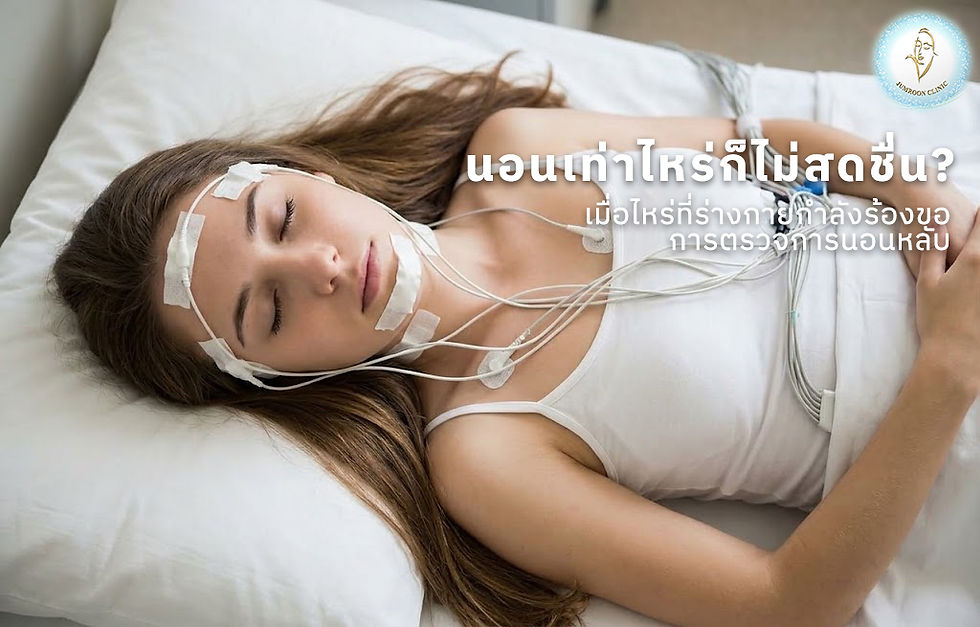
Polysomnography (PSG) or Sleep Study
Polysomnography is a comprehensive test used to evaluate the function of multiple bodily systems during sleep. It specifically monitors brain activity, breathing patterns, heart rhythm, muscle movements, and blood oxygen levels. This study plays a critical role in diagnosing Obstructive Sleep Apnea (OSA) and helps evaluate various other sleep disorders.
In-laboratory, full-night PSG is considered the gold standard and most accurate diagnostic tool for determining whether a patient has OSA and assessing its severity. It records electroencephalography (EEG), eye movements, muscle activity, heart rate, airflow, chest and abdominal movements, and blood oxygen saturation.

When OSA Is Suspected
The most common reason for ordering a PSG is suspected OSA. Patients frequently present with loud, habitual snoring, witnessed apneas (gasping, choking, or snorting during sleep), or waking up feeling breathless. Excessive daytime sleepiness is another classic symptom commonly reported by patients with OSA.
In addition, some patients may not present with obvious daytime sleepiness but suffer from comorbidities associated with OSA, such as hypertension, coronary artery disease, stroke, heart failure, atrial fibrillation, type 2 diabetes, or mood and cognitive disturbances. If symptoms suspicious of OSA are present alongside these conditions, an evaluation for sleep apnea is strongly recommended.
Medically, a diagnosis of OSA in adults can be established using either PSG or a Home Sleep Apnea Test (HSAT). Diagnostic criteria require finding $\ge 5$ obstructive respiratory events per hour accompanied by relevant symptoms or comorbidities, or $\ge 15$ events per hour even in the absence of symptoms or comorbidities.

Does Everyone Who Snores Need a PSG?
"Not everyone who snores requires a PSG."
Snoring can occur without the presence of OSA. If a patient only experiences habitual snoring without excessive daytime sleepiness, witnessed apneas, or other clinical features suggesting OSA, it may simply be primary snoring. In general, primary snoring does not require a PSG for diagnosis.
However, if snoring occurs in individuals at high risk for OSA or is accompanied by other symptoms—such as witnessed sleep apneas, severe daytime fatigue, or underlying cardiovascular diseases—a sleep study becomes far more essential. Notably, certain groups of patients with cardiovascular disease may not exhibit obvious daytime sleepiness.
Therefore, "snoring alone" does not mean a PSG is mandatory for every case. However, "snoring combined with symptoms or risk factors for OSA" serves as a vital indication for further clinical evaluation.
Does Every Patient Suspected of Having OSA Require a PSG?
"Not necessarily."
In uncomplicated adult patients presenting with signs and symptoms indicating a moderate-to-high risk of OSA, a Home Sleep Apnea Test (HSAT) can be chosen as an alternative to an in-laboratory PSG.
HSAT offers the advantage of convenience, allowing patients to sleep in their home environment with fewer attached sensors. However, its limitation lies in lower sensitivity compared to PSG, which carries a higher chance of false-negative results.
Consequently, if the HSAT result is negative or inconclusive while clinical suspicion for OSA remains high, an in-laboratory PSG should be performed as a follow-up.

When Other Sleep-Related Breathing Disorders Are Suspected
PSG is not exclusively used for diagnosing OSA; it is also invaluable when Central Sleep Apnea (CSA) is suspected. CSA occurs due to a transient reduction or absence of central respiratory drive during sleep. Patients may present with symptoms similar to OSA, such as sleepiness, snoring, witnessed apneas, or sudden awakenings with breathlessness.
CSA can co-occur with conditions like heart failure, chronic use of certain medications or substances, high altitude exposure, or it may emerge during the treatment of OSA using PAP therapy (Treatment-Emergent CSA).
A PSG allows physicians to differentiate whether sleep apneas are obstructive or central events, which is crucial for making an accurate diagnosis and formulating an appropriate treatment plan.
Furthermore, when sleep-related hypoventilation or sleep-related hypoxemia is suspected, PSG plays a pivotal role in evaluating ventilation and oxygen levels throughout the night. These conditions may be associated with obesity, pulmonary diseases, neuromuscular disorders, chest wall deformities, or certain cardiovascular diseases.

When Experiencing Excessive Daytime Sleepiness
Another scenario where PSG is indispensable is in patients experiencing Excessive Daytime Sleepiness (EDS) that disrupts daily life and cannot be explained by sleep deprivation or other common medical conditions.
In these patients, clinicians may suspect central disorders of hypersomnolence, such as narcolepsy or idiopathic hypersomnia. It is essential first to rule out other sleep disorders, such as OSA, that could account for the symptoms.
If a Multiple Sleep Latency Test (MSLT) is required to evaluate daytime sleep propensity, a PSG must be conducted on the preceding night. The PSG must record at least 6 hours of sleep to ensure that the subsequent MSLT yields valid diagnostic results.

When Abnormal Behaviors Occur During Sleep
PSG is also beneficial for evaluating individuals with abnormal sleep behaviors (parasomnias), particularly when REM Sleep Behavior Disorder (RBD) is suspected—such as talking, shouting, kicking, punching, or acting out dreams.
The reason a PSG is necessary is that patients with OSA or frequent nocturnal awakenings can exhibit behaviors that mimic RBD (pseudo-RBD). A PSG helps confirm whether these motor events occur specifically during REM sleep and are not merely arousal responses triggered by OSA or other sleep disruptions.
What Can a PSG Reveal Beyond Sleep Apnea?
A major advantage of PSG is that it does not merely assess whether breathing stops; it provides a comprehensive overview of sleep architecture throughout the entire night. It reveals how long the patient actually slept, the frequency of nocturnal awakenings, alterations in sleep stages, and the exact sleep phase during which abnormal events occurred.
These detailed insights explain why PSG is exceptionally valuable in managing complex patients or when simpler diagnostic tests fail to explain a patient's symptoms.


Comments