


Clarifying the Doubts: What Is a Sleep Study (PSG)? Comparing the Differences Between Types 1–4

What Does Polysomnography (PSG) Measure?
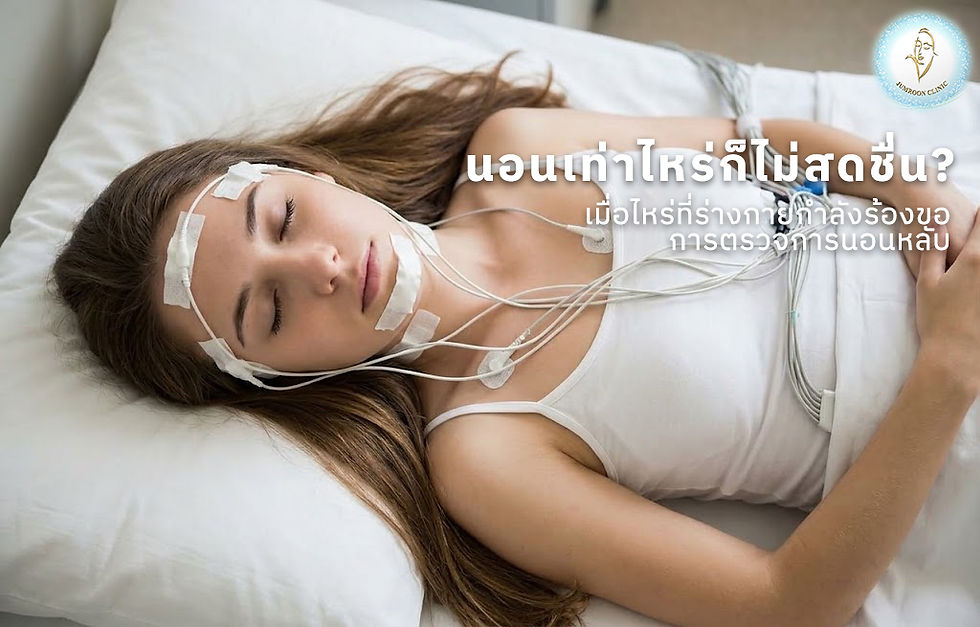
During the test, various sensors are attached to different parts of the patient's body to record data while they sleep, including:
Brain activity: To determine whether the patient is awake or asleep, and to identify specific sleep stages
Eye movements
Muscle activity
Heart rhythm
Airflow through the nose and mouth
Chest and abdominal respiratory efforts
Blood oxygen levels
This data helps physicians determine how frequently breathing stops or becomes shallow, as well as the specific sleep stages during which these events occur.
How Many Types of Sleep Studies Are There?
Sleep studies are categorized into 4 levels, or Types I–IV, distinguished by the number of monitoring channels and the type of data collected:
Type I: Comprehensive In-Laboratory PSG
This is the most detailed type of sleep study. It is conducted in a hospital or an accredited sleep center under the continuous supervision of a sleep technologist throughout the night.
It monitors brain waves, eye movements, muscle tone, cardiac activity, respiration, and blood oxygen levels. Because it tracks brain activity, it precisely identifies when the patient is actually asleep and calculates the exact frequency of breathing pauses.
This type is considered the gold standard for diagnosing Obstructive Sleep Apnea (OSA).
Type II: Unattended Portable PSG
This type offers a comprehensive level of monitoring similar to Type I, but the device can be taken home for testing without an attending technologist present during the night.
Because it still records brain activity, physicians can differentiate between sleep and wakefulness and accurately calculate the frequency of sleep-disordered breathing events based on actual sleep time.
Type III: Home Sleep Apnea Testing (HSAT) / Respiratory Monitoring
This is a portable device that patients can take home. It focuses primarily on measuring respiratory parameters, heart rate, and blood oxygen levels.
Its main limitation is that it does not measure brain waves (EEG), making it impossible to confirm whether the patient was awake or asleep during data recording. Therefore, the calculated frequency of breathing pauses is an estimate
rather than a value derived from total actual sleep time.
Type IV: Simple Screening / Single or Dual Channel Testing
This is the simplest form of monitoring, using the fewest sensors—often tracking only limited data such as blood oxygen saturation and heart rate.
Without brain wave monitoring, it cannot determine how long the patient actually slept, making the collected data much more limited compared to Types I–III.

Which Type Should You Choose?
Suspecting OSA does not necessarily mean every patient must undergo a full in-laboratory PSG.
For uncomplicated adult patients presenting with clear symptoms, physicians may opt for a Home Sleep Apnea Test (HSAT), which is more convenient and effective for diagnosing OSA.
However, if home testing results are negative or inconclusive while clinical suspicion for OSA remains high, a comprehensive in-laboratory PSG should be performed as a follow-up.
Furthermore, if other sleep disorders are suspected—such as central sleep apnea, sleep-related hypoventilation, or parasomnias—a comprehensive PSG is far more beneficial.
In addition, for individuals evaluated for narcolepsy, an in-laboratory PSG is required on the night prior to a Multiple Sleep Latency Test (MSLT), which measures how quickly a person falls asleep during the day. The preceding PSG must record at least 6 hours of sleep for the MSLT to yield valid results.

Comments