


Do IV Vitamin Drips (offering 100% absorption) really beat oral supplements? A deep dive into the facts doctors want you to know

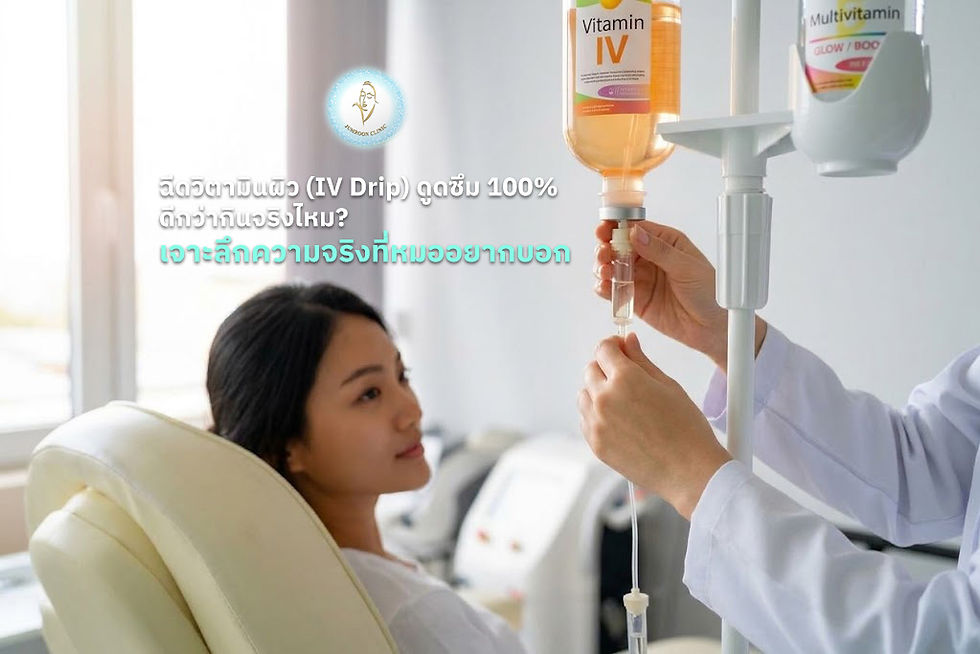
Intravenous Vitamin Therapy (IV Vitamin Therapy)
Intravenous Vitamin Therapy (IV Vitamin Therapy) is the administration of specific vitamins, minerals, or nutrients directly into the bloodstream through a vein, under the supervision of medical professionals.
Currently, IV Vitamin Therapy has gained growing attention because it delivers nutrients directly into the bloodstream, bypassing parts of the digestive absorption process. However, receiving vitamins intravenously does not necessarily mean it is suitable or more beneficial than oral intake for everyone. The selection should be evaluated on an individual basis, considering health status, nutritional deficiencies, underlying medical conditions, current medications, and specific treatment goals.

How Does IV Vitamin Therapy Differ from Oral Intake?
The main difference lies in the route of entry into the body. With oral intake, vitamins must undergo digestion, absorption through the gastrointestinal tract, and metabolic processes before entering the bloodstream. The amount absorbed depends on the type of nutrient, co-ingested food, digestive health, and individual biological factors. In contrast, IV therapy delivers nutrients directly into a vein, entering the bloodstream immediately, allowing the type and dosage of nutrients to be customized to an individual's specific needs.
However, the phrase "100% absorption" does not imply that IV therapy is always superior to oral supplements. If the body already has adequate nutrient levels, increasing nutrient concentrations in the bloodstream does not necessarily yield additional health benefits. Furthermore, excessive amounts of certain vitamins or minerals can cause adverse side effects or toxicity.
Therefore, the key point of IV Vitamin Therapy is not simply administering high doses of vitamins, but rather selecting the appropriate types, doses, and administration methods tailored to each individual.

Popular Vitamins and Nutrients Used in IV Therapy
Myers’ Cocktail: Consists of Magnesium, Calcium, B-complex vitamins, and Vitamin C; it is one of the most widely discussed IV nutrient formulas.
Anti-Aging Drip: May contain antioxidants such as Vitamin C, Nicotinamide Adenine Dinucleotide (NAD+), and Alpha-Lipoic Acid (ALA), commonly used in anti-aging medicine.
Immunity Enhancing Drip: Focuses on vitamins and nutrients such as Vitamin B complex and Vitamin C to support immune function.
Hydration Drip: Focuses on fluids and electrolytes, suitable for individuals experiencing dehydration or requiring electrolyte rebalancing.
Who Is IV Vitamin Therapy Suitable For?
IV Vitamin Therapy may be suitable for specific groups of individuals who have been evaluated and deemed in need of supplemental vitamins, minerals, or nutrients, including:
Individuals with diagnosed vitamin or mineral deficiencies
Individuals unable to obtain sufficient nutrients from diet alone
Certain elderly individuals deemed necessary by a physician
Individuals with specific digestive or absorption disorders
Individuals with specific medical indications
Guidelines from the Department of Thai Traditional and Alternative Medicine also emphasize evaluating vitamin, mineral, and nutrient deficiency states, alongside individual health factors, prior to providing service.
Importantly, "wishing for good health" is not equivalent to "having a medical indication." Choosing IV Vitamin Therapy should begin with an assessment of the body's actual needs or medical problems, rather than selecting a formula purely from a menu list.

Can Healthy Individuals Undergo IV Vitamin Therapy?
Healthy individuals can undergo IV Vitamin Therapy in certain cases, provided a medical assessment shows no contraindications and confirms its appropriateness. However, this does not mean every healthy person needs it. For individuals who consume a balanced diet, have normal nutritional status, lack nutrient deficiencies, and have no specific medical indications, a balanced diet remains the fundamental source of nutrition.
Research regarding consumer IV Vitamin Therapy indicates that evidence supporting its use for general "wellness" in healthy populations remains limited and insufficient to conclude that IV therapy is superior to a healthy diet or oral supplements. Therefore, if healthy individuals wish to receive IV Vitamin Therapy, the focus should be placed on evaluating appropriateness and safety rather than receiving regular high-dose infusions.
Safety of IV Vitamin Therapy
Although IV Vitamin Therapy can be performed safely when properly screened and administered, it is not a procedure without risk. Intravenous vitamin and mineral administration should always be evaluated by a physician beforehand, especially in individuals with underlying health conditions or risk factors.
Groups requiring special medical evaluation before receiving IV Vitamin Therapy:
Pregnant or breastfeeding women
Individuals with a history of allergies (e.g., to medications, vitamins, or other substances)
Individuals with impaired renal function or chronic kidney failure, as the kidneys play a crucial role in eliminating substances from the body
Individuals with G6PD deficiency, particularly when considering high-dose Vitamin C
Individuals taking antiplatelet medications, who should inform their physician to assess risks beforehand
Individuals currently fasting or on strict weight-loss diets, as their nutritional status may affect medical considerations for intravenous therapy
Guidelines for IV Vitamin Therapy mandate taking a medical history and screening for risks prior to every treatment.
Potential risks and complications from IV fluid infusions include:
Pain, swelling, or irritation at the injection site
Phlebitis (inflammation of the vein)
Fluid extravasation (leakage outside the vein)
Infection
Allergic or hypersensitivity reactions
Nausea, vomiting, or dizziness
Fluctuations in blood pressure
Electrolyte or nutrient imbalances
If abnormal symptoms occur—such as palpitations, lightheadedness, nausea, vomiting, hypotension, chest tightness, shortness of breath, or loss of consciousness—infusion must be stopped immediately and medical evaluation provided.

Why Should IV Vitamin Therapy Be Administered by a Physician?
Prior to administering IV Vitamin Therapy, a physician should conduct a comprehensive evaluation including:
Medical History Taking: Assessing underlying diseases, current medications, allergy history, pregnancy status, treatment goals, and symptoms.
Physical Examination: Evaluating overall health and identifying risk factors related to intravenous infusions.
Laboratory Testing (when appropriate): Assessing kidney/liver function, baseline vitamin/mineral levels, or other specific tests based on individual risks.
Formula and Dosage Selection: Customizing treatment, as not everyone requires the same vitamins or dosages.
Medication & Supplement Review: Preventing drug–nutrient interactions and avoiding redundant dosing.
Intra-Infusion Risk Management: Monitoring and managing any adverse reactions immediately.
Clinical practice guidelines specify essential steps from history taking, physical examination, blood testing, and evaluating necessity, through to follow-up, emphasizing that vitamin therapy requires medical diagnosis and supervision.
IV Vitamin Therapy Is Not a Replacement for Health Fundamentals
Most importantly, IV Vitamin Therapy cannot replace the basic foundations of good health. Getting adequate sleep, eating a balanced diet, exercising regularly, maintaining a healthy weight, avoiding smoking, limiting alcohol, managing stress, and undergoing regular medical checkups remain the primary pillars of health.
Intravenous vitamin administration should serve as an appropriate supplement, not a substitute for nutritious food or healthy lifestyle habits. Current evidence does not definitively support claims that IV Vitamin Therapy can make everyone "stronger," "boost immunity," "anti-age," or "detoxify," particularly in healthy individuals without nutrient deficiencies.
Summary
IV Vitamin Therapy delivers vitamins, minerals, and nutrients directly into the bloodstream, offering fast systemic availability and customizability for individual needs.
However, IV Vitamin Therapy is not necessary for everyone, and "more is not always better." Considerations must follow the framework: "What is the patient's need? → Which nutrients are required? → In what dosage? → What are the risks? → Is the intravenous route appropriate?" rather than choosing from popular menus.
Ultimately, the goal of effective IV Vitamin Therapy is not "giving the highest dose of vitamins," but rather "providing the right nutrients to the right person, in the right dosage, and with the utmost safety." Physician assessment beforehand is an essential component to ensure that vitamin therapy is a personalized health decision, rather than a trend-following procedure.
Reference
1. Alternative Medicine Center, Division of Alternative Medicine, Department of Thai Traditional and Alternative Medicine. Clinical Practice Guideline for Intravenous Vitamin Therapy. Nonthaburi: Department of Thai Traditional and Alternative Medicine; 2022.
2. Mitra S, Paul S, Roy S, et al. Exploring the Immune-Boosting Functions of Vitamins and Minerals as Nutritional Food Bioactive Compounds: A Comprehensive Review. Molecules. 2022;27(2):555.
3. Dayal S, Kolasa KM. Consumer Intravenous Vitamin Therapy: Wellness Boost or Toxicity Threat? Nutrition Today. 2021;56(5):234-238.
4. Shanaida M, Lysiuk R, Mykhailenko O, et al. Alpha-lipoic Acid: An Antioxidant with Anti-aging Properties for Disease Therapy. Curr Med Chem. 2025;32(1):23-54.
5. Superti F, Russo R. Alpha-Lipoic Acid: Biological Mechanisms and Health Benefits. Antioxidants (Basel). 2024 Oct 12;13(10):1228.
6. Tripathi AK, Ray AK, Mishra SK, Bishen SM, Mishra H, Khurana A. Molecular and Therapeutic Insights of Alpha-Lipoic Acid as a Potential Molecule for Disease Prevention. Rev Bras Farmacogn. 2023;33(2):272-287.
7. Reyna K, Heinzen G, Patel N, et al. Intravenous infusion of nicotinamide adenine dinucleotide (NAD+) versus nicotinamide riboside (NR): a retrospective tolerability pilot study in a real-world setting. Front Aging. 2026;7:1652582.
Compiled by Assoc. Prof. Dr. Jumroon Tungkeeratichai and Dr. Nawach Angkara.


Comments